
article
Daily AI Model Release Digest · November 13, 2026
AI models, Gemini 4 Hydrogen, Edge0-145B, Hy Realtime, Fx-Bio-1031, Yufei, daily digest
Published November 16, 2026
Date: November 13, 2026 (Beijing time) Scope: Only models released/launched/announced on November 13 Beijing time are included; models released by US vendors on November 12 (US Eastern) and landing on November 13 Beijing time are included with notes. Deduplicated against the November 11 and November 12 digests; entries that merely update old models or are not "models" per se are excluded.
1. Gemini 4 Hydrogen
- Developer: Google DeepMind
- Release time: November 13, 2026 (Beijing time; announced on the evening of November 12 US Eastern, confirmed by Sundar Pichai himself)
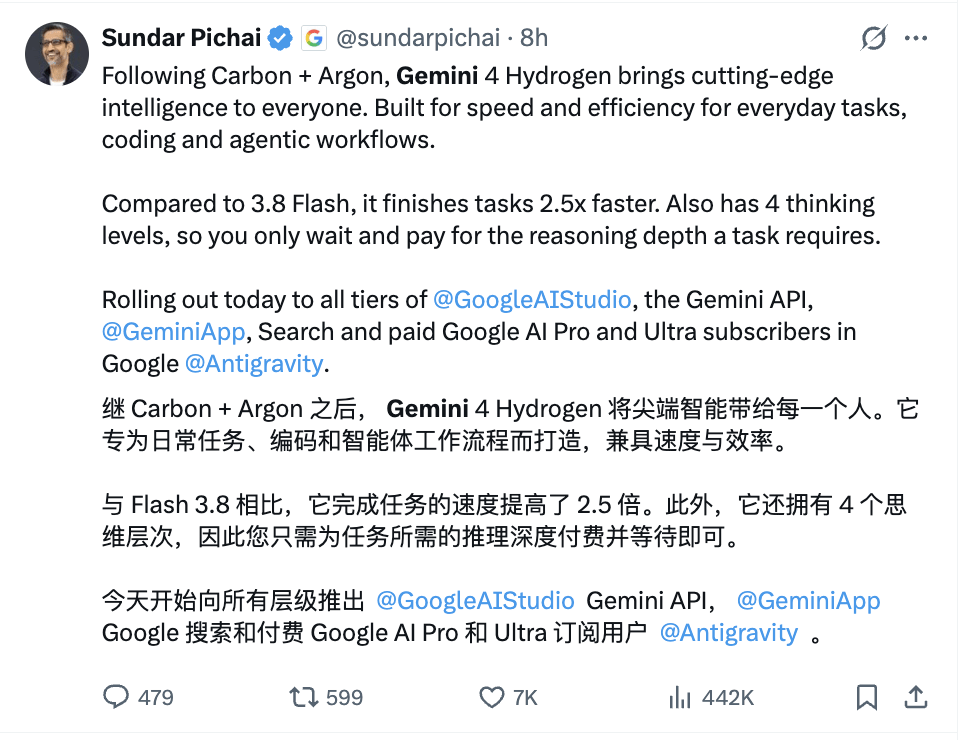
- One-line intro: Google's third new model in six weeks, positioned as a fast-execution model for everyday coding and agentic workflows, and opened to all users worldwide for the first time — including free users.
- Key capabilities:
- Division of labor with Carbon and Argon: Carbon/Argon handle complex reasoning and long-horizon planning, while Hydrogen focuses on fast coding, tool calling, and continuously executed everyday tasks; supports four thinking tiers (low/medium/high/extra-high)
- Scores 51 on the Artificial Analysis Intelligence Index at the default high tier (above Argon's 50) and 54 at xhigh; 2.5x faster task completion than the previous-generation Gemini 3.8 Flash, with Terminal-Bench 4.1 jumping from 18.2% to 57% and hallucinations reduced more than 5x
- Unified pricing across a 1M-token context window ($1.50 input / $7.50 output per million tokens), native multimodal understanding and generation; available across the Gemini app, Google Search, AI Studio, the Gemini API, and Antigravity, including for free users
- Antigravity also launches the Orchestrator, which dynamically switches between Carbon and Hydrogen within a single session: task success rates approach pure Carbon while consuming 24% fewer quotas and running 19% faster
- On safety: agent overreach reduced by up to 81%, under-service reduced by up to 79%, and 99.9% chain-of-thought readability
2. Edge0-145B / Edge0-120B

- Developer: Edge0 (open-source project)
- Release time: November 13, 2026, 02:01 Beijing time (November 12 US Eastern)
- One-line intro: Claimed to be the world's first open-source on-device model at 145 billion parameters that runs locally on a personal computer, bringing cloud-frontier coding, reasoning, and agentic capabilities to laptops with open weights and offline availability.
- Key capabilities:
- Latent mixture-of-experts (MoE) architecture derived from Qwen3.8-Flash-Next: 145B total parameters with only about 10B active per token (512 experts, 10 routed per token, every 64 experts sharing two large matrices), natively trained in 4-bit
- Three-tier storage pipeline (GPU VRAM / system memory / SSD) plus CPU-GPU co-scheduling and speculative decoding: peak memory of just 29GB, decoding at 80+ tokens/s and prefill at 1,100+ tokens/s, with no slowdown across 128K–256K context
- Self-reported Terminal-Bench 2.1 score of 86.52, beating Claude Opus 4.6 Max (78.2) and Qwen3.8-Flash-Next (83.3) in its comparison table; DeepSWE 1.1 score of 64.6
- Weights released on Hugging Face in Q3_K and NVFP4 formats; the edge0-infer inference framework is open-sourced under Apache 2.0, while weights follow the Edge0 Community Model License 1.0 (stacked with the Qwen license; commercial use requires authorization)
3. Tencent Hunyuan Hy Realtime
- Developer: Tencent Hunyuan
- Release time: November 13, 2026
- One-line intro: Tencent Hunyuan's new real-time speech model with comprehensive upgrades in speech understanding, instruction following, and human-like expression, plus first-of-their-kind agentic tool calling and singing capabilities — marking AI voice interaction's shift toward an "agent form."
- Key capabilities:
- Enhanced intent understanding and instruction following: restores intent from incomplete inputs such as mumbled speech, half-finished sentences, or mid-sentence corrections using conversation context; more stable multi-turn instruction following and long-conversation context management
- Agentic capabilities: autonomously decides whether to search the web based on conversation context and user intent, unifying search decisions, tool calls, and answer generation end to end
- Singing capability co-designed with Tencent Music's TME Lingyin AI team: users can request songs by artist, album, genre, language, release year, and popularity, and the model sings them within the conversation
- Cross-modal alignment in pre/post-training (CT → SFT → MOPD → four-stage RL): retention of text intelligence transferred to speech tasks rose from 21% to 69%; internal expert blind evaluations show significant leads in core experience dimensions, with leading aggregate results on public speech benchmarks
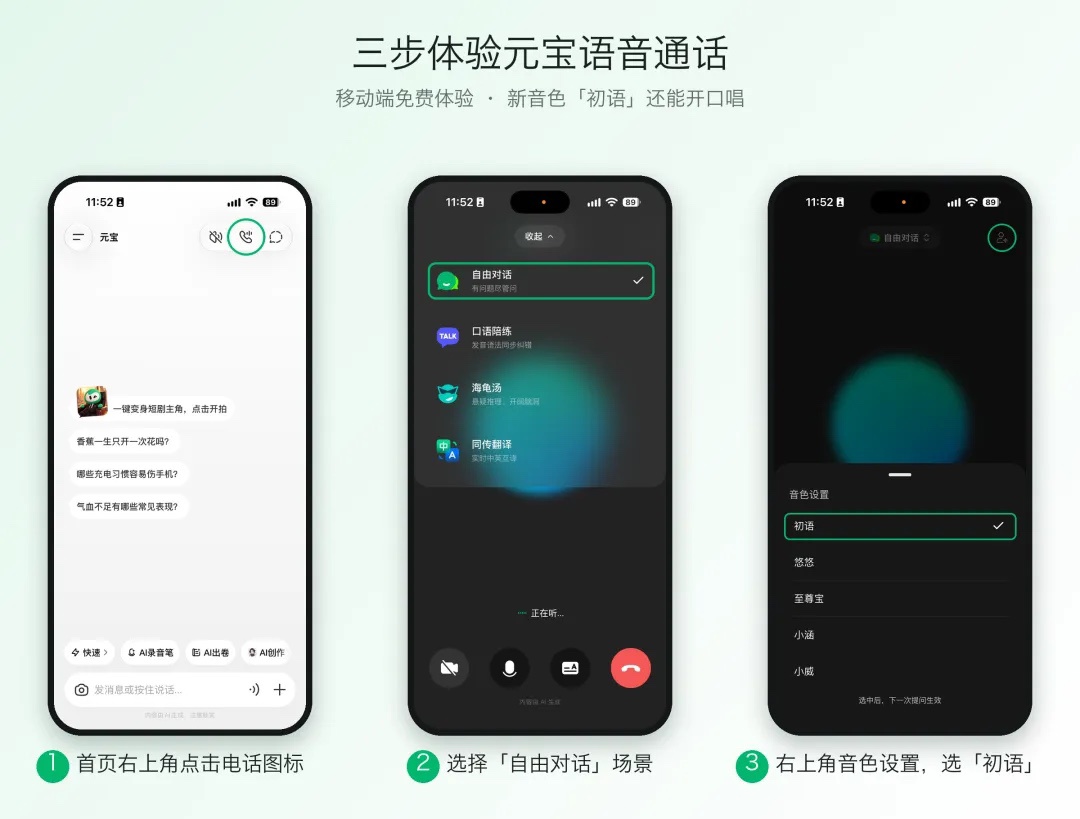
- Already live in Tencent Yuanbao voice calls (new voice "Chuyu") and Tencent customer service, with a Tencent Cloud API coming soon
4. Fx-Bio-1031
- Developer: Endless Frontier (initiated by a CAS academician; jointly incubated by Shanghai Jiao Tong University, the Shanghai Innovation Institute for Algorithms, and DP Technology)
- Release time: November 13, 2026
- One-line intro: A vertical LLM for professional bioinformatics tasks, with full model weights opened today, aiming at the direction of closed-source bio models like OpenAI's GPT-Rosalind — and bringing RSI (recursive self-improvement) into the life sciences.
- Key capabilities:
- Deep RSI post-training on top of Qwen3.8-Flash-Next, natively supporting 512K long context and thinking mode, able to ingest long tool-call trajectories, multiple full papers, and large-scale omics statistical outputs
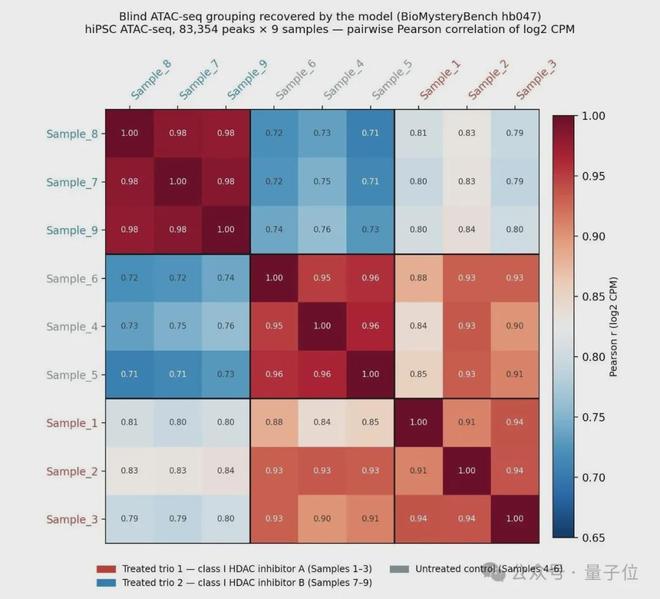
- Beats GPT-6 Astra and Claude Opus 5 in demanding blind tests: on bioinformatics blind-test tasks such as BioMysteryBench, the model recovered blind groupings of unknown-labeled hiPSC ATAC-seq data (83,354 peaks × 9 samples), with pairwise Pearson correlations up to 0.98
- Has already run through full bio-pharma "dry lab" workflows via an iterative closed loop: real tasks expose gaps → AI iterates data and tool pipelines → new models are trained → results return to rigorous evaluation for the next calibration round
- Full weights, tokenizer, processor, and generation configs are open (Qwen Community License 1.0), ready for local deployment and automated bioinformatics pipelines
5. Yufei — Vertical LLM for International Chinese Language Education

- Developer: Center for Language Education and Cooperation (CLEC), Ministry of Education of China; released at the 2026 World Chinese Language Conference
- Release time: November 13, 2026 (opening day of the 2026 World Chinese Language Conference in Beijing)
- One-line intro: A vertical LLM for international Chinese language education serving learners, teachers, and educational institutions worldwide, deeply integrating AI technology with the domain knowledge, pedagogy, and real scenarios of Chinese language teaching.
- Key capabilities:
- For learners: instant-feedback learning assessments and on-demand personalized tutoring
- For teachers: rapid multi-turn generation of teaching materials covering lesson prep, classroom interaction, and post-class consolidation, improving teaching efficiency
- For institutions: standardized APIs that connect stakeholders and empower applications, promoting sharing of quality teaching resources and intelligent services
- Context: 92 countries have included Chinese in their national education systems, with 210 million overseas learners; HSK has set up over 1,500 test centers in 169 countries, and 2026 candidate numbers exceeded 1 million for the first time